
If you've ever come home from a walk feeling more like you were dragged than you were walking your dog — you're not alone. Pulling on leash is one of the most common issues we see here at Hot Diggity Dog Resort, and the good news is that it's very fixable with the right approach.
My name is Penny DiLoreto. I'm a Certified Professional Dog Trainer (CPDT-KA), Certified Animal Behaviorist, and co-owner of Hot Diggity Dog Resort in Escondido, California. Loose leash walking is one of my favorite skills to teach — because when it clicks, it genuinely transforms the daily walk from a chore into something you and your dog both look forward to.
This guide gives you everything you need to get started, whether you have a brand-new puppy or a determined adult dog who's been pulling for years.
What You'll Need
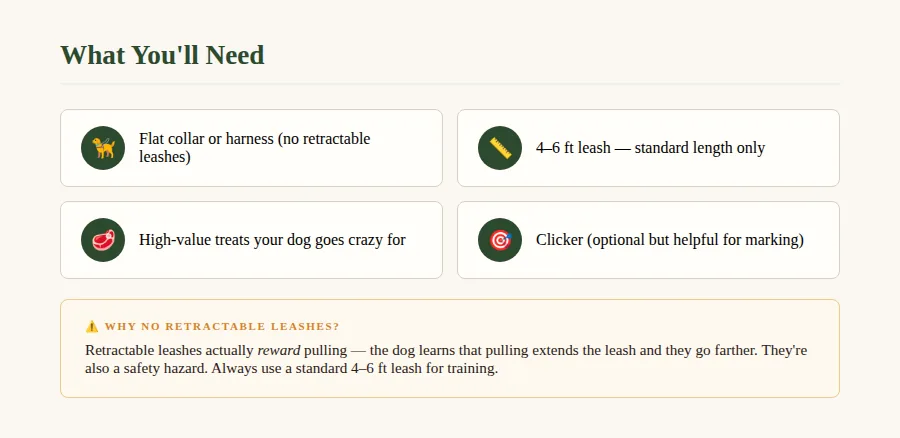
You don't need expensive equipment to get started. Here's what works best:
The Key Concept: The "J" Shape
THE GOLDEN RULE
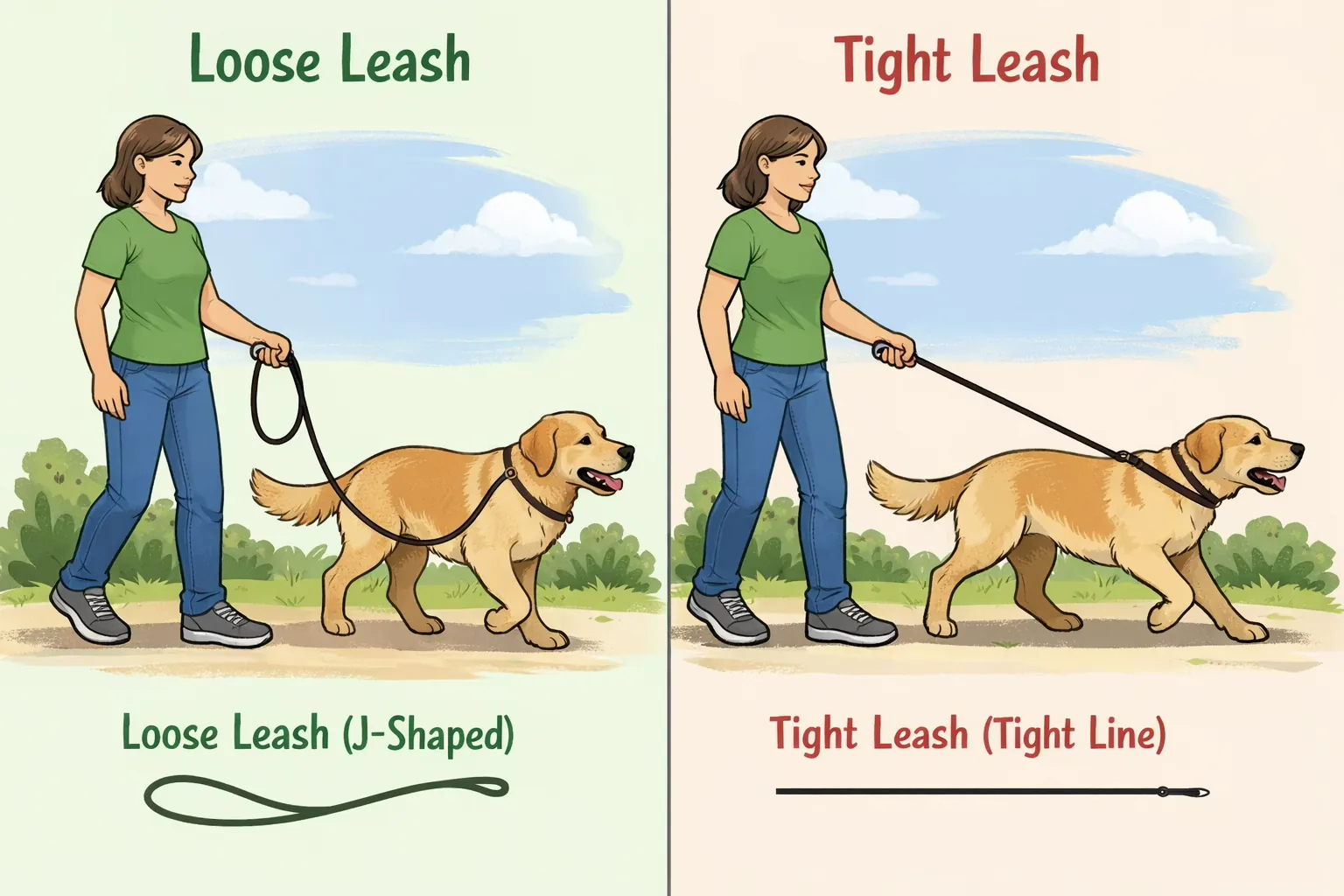
"A loose leash forms a relaxed 'J' shape between you and your dog."
Tension = stop moving forward ~ Slack = keep going. Simple as that.
This one concept is the foundation of everything. Your dog needs to learn that a tight leash makes all forward progress stop — and a loose, relaxed leash means the walk continues. Once that association clicks, everything else falls into place.
The Setup That Most People Miss
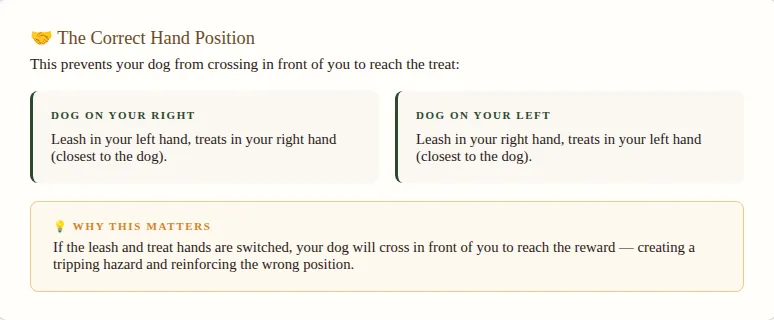
Before you even take a step, there's a simple consistency habit that will dramatically speed up your dog's learning: always walk your dog on the same side of your body.
As humans, we're quick to tell our dogs where not to be, but we don't always clearly show them where they should be. Picking a side and sticking to it solves that problem completely — your dog learns exactly where "the spot" is.
Step-by-Step: The Loose Leash Walking Method
Follow these steps in order. Don't rush to step 6 before your dog is solid on steps 1–3.
- Start in a quiet, zero-distraction area
Inside your home, a hallway, or a calm backyard. Your dog can't focus on you if they're competing
with squirrels, other dogs, or traffic. Set them up for success from day one.
- Reward your dog for being close to your side
Before you even move, mark and reward your dog for simply standing next to you in the correct
position. This is the "sweet spot." The more you reinforce this position, the more your dog will seek
it out.
3. Take a few steps and reward a loose leash
If the leash stays relaxed in that "J" shape, praise verbally and offer a treat. Keep moving. You're
building the association: loose leash = good things happen.
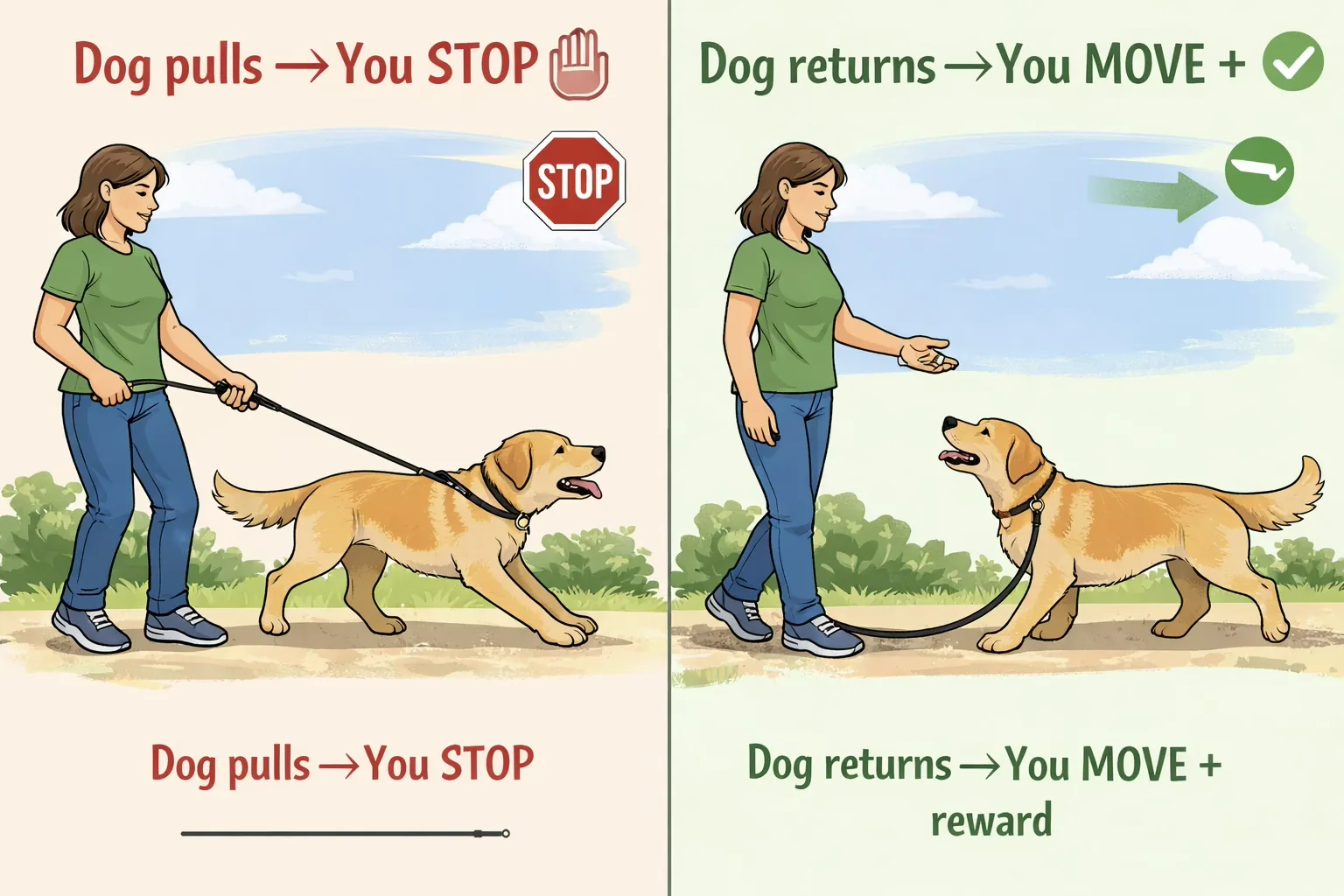
4. Stop the moment the leash tightens — don't pull back
The instant you feel tension, plant your feet and stop completely. Do not tug or yank the leash.
Pulling back actually encourages your dog to pull harder — it turns into a tug-of-war your dog is
built to win.
5. Wait for your dog to return to you and check in
Be patient here — especially in the early sessions. When your dog turns back to look at you or
returns to your side, that's your moment. Mark it, reward it, and start moving again. Your dog is
learning that checking in with you is what makes the walk continue.
6. Change directions frequently
This is a game-changer that most guides skip. Randomly turning left, right, or reversing direction
keeps your dog focused on you — they have to pay attention to where you're going rather than
charging ahead. It shifts the dynamic from your dog leading the walk to the two of you moving
together.
📋 Your Daily Homework
Consistency is what makes this work. Here's how to structure your practice sessions:
- ~ Practice daily — even 5–10 minutes in a low-distraction area beats a 30-minute walk in a chaotic environment.
- ~ Start indoors or in your backyard — this isn't laziness, it's smart training. Your dog needs to learn the skill before they're asked to perform it around distractions.
- ~ Don't practice around distractions yet — attempting this around other dogs, cars, or people before your dog is ready will only cause frustration for both of you. The session will end badly, and you'll undo progress.
- ~ Track your progress — note how many steps you can take before your dog pulls. That number will
- grow faster than you think.
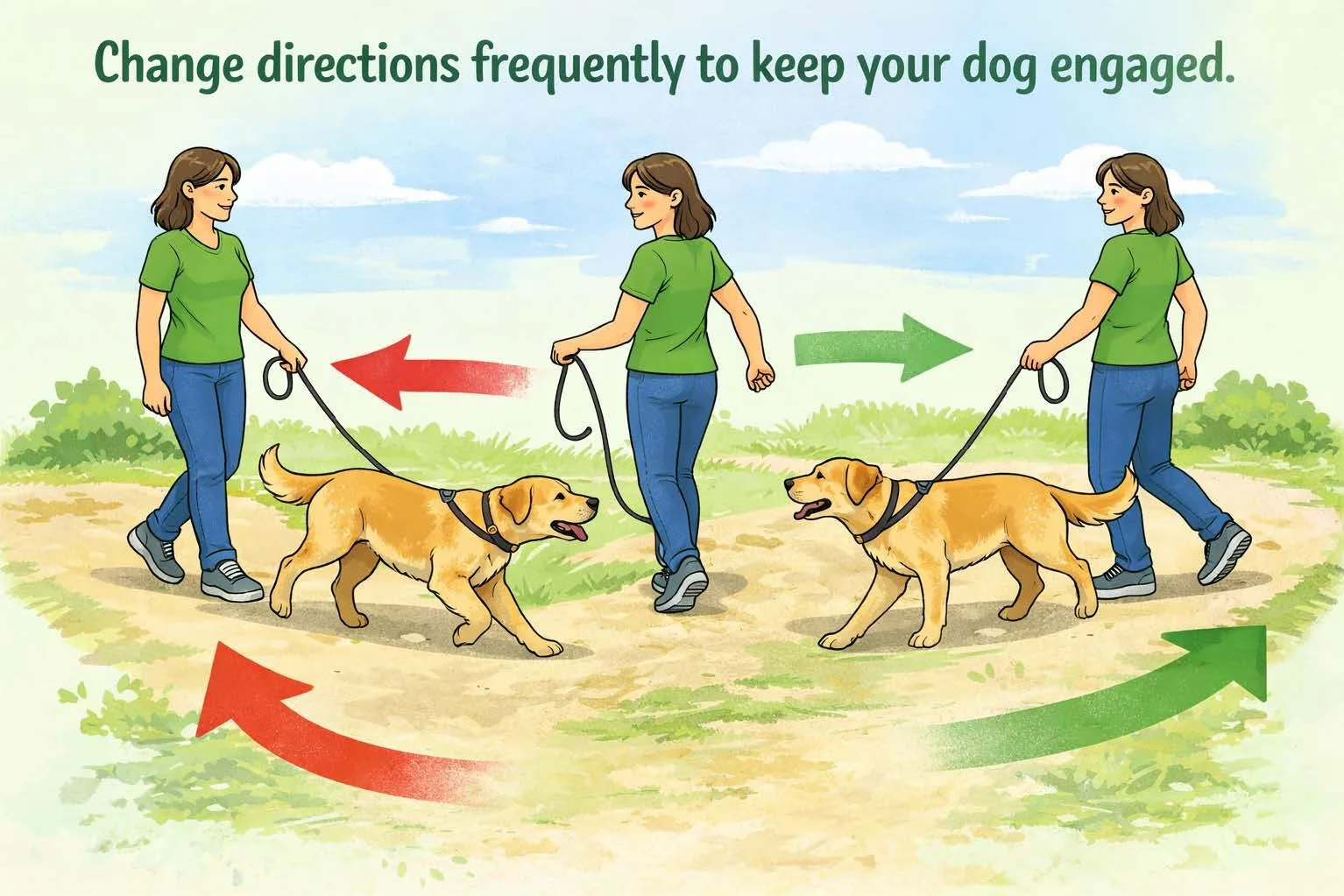
Changing directions frequently is one of the most effective ways to keep your dog focused on you during a walk.
🌿 Phase Two: Adding Distractions
Once your dog consistently keeps the leash in a relaxed "J" shape in a calm environment, you're ready to gradually increase the challenge. Start with mild distractions — a neighbor's yard, a quiet sidewalk — before working up to busier environments like parks or pet-friendly stores. The key word is gradually. If your dog falls apart at the new distraction level, you've moved too fast. Take a step back — that's not failure, that's good training.
A Note on Patience — From One Dog Person to Another
I want to be honest with you: loose leash walking takes repetition. Most dogs don't get it on the first day, or even the first week. But here's what I've seen over and over in my years of training: the owners who stay consistent, keep sessions short, and resist the urge to pull back on the leash — they get results. Real, lasting results.
Your patience will absolutely pay off. And when you and your dog finally hit that stride — moving together, leash relaxed, both of you enjoying the walk — it's one of the best feelings in dog ownership.
Need More Help with Leash Manners?
Penny offers private and in-home dog training in Escondido and throughout North San Diego County — tailored to your dog's specific needs and your goals. Click the button below and tell us about your dog.
Penny DiLoreto
CERTIFIED DOG TRAINER, CPDT-KA, * CERTIFIED ANIMAL BEHAVIORIST * MASTER GROOMER * VETERINARY ASSISTANT * BOOK AUTHOR
Penny is the co-owner of Hot Diggity Dog Resort in Escondido, CA, and has been helping North San Diego County families build better relationships with their dogs since 2002. She offers private training, in-home sessions, on-line training, and the L.E.E.P. training program.