
Unlocking the Benefits of Anesthesia-Free Canine Teeth Cleaning: A Safe and Gentle Approach for Your Furry Friend
You've noticed the doggy breath. Maybe a little tartar on the back teeth. You know it needs attention, but the thought of putting your dog under general anesthesia makes you hesitate. There's a gentler option to talk over with your vet: teeth cleaning without general anesthesia.
In this article, we will explore the many benefits of anesthesia-free teeth cleaning for dogs. Your dog doesn't go under general anesthesia (light sedation is available if the vet recommends it), and the visit is calm and low-key. With specialized techniques and tools, veterinary professionals can effectively remove plaque and tartar buildup while ensuring your pet's comfort and safety.
We will delve into the reasons why anesthesia-free canine teeth cleaning is becoming increasingly popular among pet owners. From its affordability and convenience to its ability to support overall dental health, this method offers a holistic approach to maintaining your dog's pearly whites.
Join us as we uncover the advantages of anesthesia-free teeth cleaning and discover how this safe and gentle approach can benefit your furry friend in more ways than one.
To watch a video of an actual anesthesia-free canine teeth cleaning, one is available here.
To book an appointment for Anesthesia-free canine teeth cleaning or a vaccination or micro-chipping you may do so at this link.
Understanding anesthesia-free canine teeth cleaning
Anesthesia-free canine teeth cleaning is a non-invasive dental procedure that aims to remove plaque and tartar buildup from a dog's teeth without the use of anesthesia. This approach has gained popularity among pet owners who are seeking a less risky and more comfortable option for their furry friends.
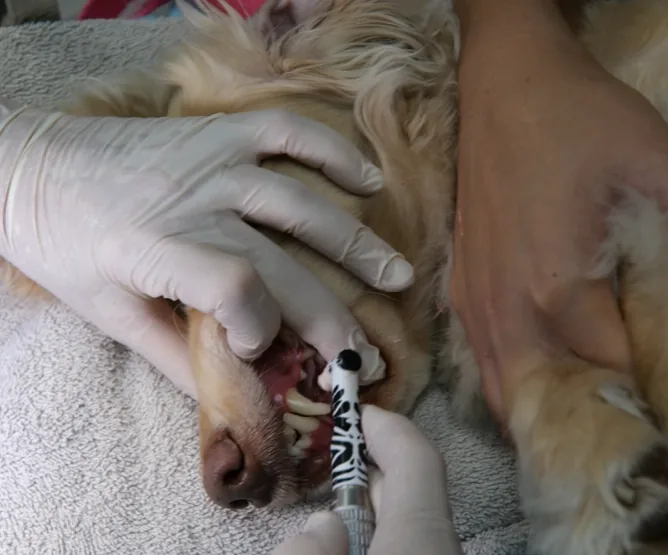
During anesthesia-free teeth cleaning, a veterinary professional uses specialized techniques and tools to carefully remove plaque and tartar from the surface of the teeth. This is done through a combination of manual scaling and ultrasonic scaling, which effectively breaks down and removes the buildup. The procedure is typically performed in a calm and controlled environment, with the dog's comfort and safety as the top priority.
The benefits of anesthesia-free teeth cleaning for dogs
There are several benefits to opting for anesthesia-free teeth cleaning for your dog. One of the biggest is simple: your dog doesn't go under general anesthesia. For many pet parents, that alone brings real peace of mind. If your dog needs a little help relaxing, the veterinarian may recommend light sedation.
Another benefit of anesthesia-free teeth cleaning is the reduced stress and anxiety for your dog. The cleaning is done calmly and gently, with lots of patience, so your dog can build a good association with dental care. Most dogs stay awake the whole time, and light sedation is available if the veterinarian thinks it will help.
Additionally, anesthesia-free teeth cleaning is a more affordable option compared to traditional anesthesia-based cleanings. The cost of anesthesia can significantly increase the overall expense of dental care for your dog. By choosing anesthesia-free cleaning, you can save money while still providing essential dental maintenance for your pet.
Common misconceptions about anesthesia-free dental cleanings
There are some common misconceptions surrounding anesthesia-free dental cleanings that may discourage pet owners from considering this approach. One of the most prevalent misconceptions is that anesthesia-free cleanings are not as thorough or effective as traditional cleanings. When it's done by a skilled veterinary professional, it does a thorough job of removing plaque and tartar from the teeth. Your vet can tell you whether your dog needs anything more.
Another misconception is that anesthesia-free cleanings are only suitable for dogs with minimal dental issues. While it is true that dogs with severe dental issues may require a more invasive procedure, anesthesia-free dental cleanings can still be beneficial for dogs with moderate plaque and tartar buildup. Regular cleanings can help prevent the progression of dental disease and maintain your dog's oral health.
How anesthesia-free teeth cleaning works
Anesthesia-free teeth cleaning involves several steps to ensure a thorough and effective cleaning process. The procedure typically begins with a visual examination of your dog's mouth to assess the overall condition of their teeth and gums. This allows the veterinary professional to identify any areas of concern and determine the appropriate course of action.
Next, the dental professional will use specialized tools to manually remove plaque and tartar from the surface of the teeth. This process, known as scaling, involves carefully scraping away the buildup without causing damage to the tooth enamel. Ultrasonic scaling may also be used to break down and remove tougher areas of plaque and tartar.
Once the scaling process is complete, the veterinary professional will polish your dog's teeth to remove any remaining debris and smooth the tooth surfaces. This helps prevent future plaque buildup and gives your dog's teeth a clean and polished appearance.
Is anesthesia-free teeth cleaning safe for dogs?
Anesthesia-free teeth cleaning is generally considered safe for dogs when performed by a trained and experienced veterinary professional. However, it is essential to choose a reputable provider who follows strict protocols and maintains a high standard of care.
Before scheduling an anesthesia-free dental cleaning for your dog, it is essential to discuss their overall health and any underlying medical conditions with your veterinarian. Some dogs may have specific health issues that make anesthesia-free cleaning unsuitable or require additional precautions.
While anesthesia-free teeth cleaning can be a safe option for many dogs, it is important to remember that it may not be suitable for every dog. Dogs with severe dental disease or those who require extractions or more invasive procedures may still benefit from traditional anesthesia-based dental cleanings. Your veterinarian can provide guidance on the best approach for your dog's specific needs.
Finding a reputable provider for anesthesia-free teeth cleaning
When considering anesthesia-free teeth cleaning for your dog, it is crucial to find a reputable provider who specializes in this procedure. Look for a veterinary professional who has extensive experience in anesthesia-free dental cleanings and a track record of successful outcomes.
Research the provider's credentials and qualifications, and ask for references or testimonials from satisfied clients. Additionally, inquire about the specific techniques and tools they use during the cleaning process to ensure they are up-to-date with the latest advancements in anesthesia-free dental care.
Tips for maintaining your dog's dental health at home
While anesthesia-free teeth cleaning is an effective way to remove plaque and tartar buildup, it is equally important to maintain your dog's dental health at home. Here are some tips to help you keep your furry friend's teeth clean and healthy:
- Brush your dog's teeth regularly: Brushing your dog's teeth with a pet-specific toothbrush and toothpaste is one of the most effective ways to prevent plaque buildup. Aim to brush your dog's teeth at least two to three times a week, using gentle circular motions.
- Provide dental chews and toys: Dental chews and toys can help remove plaque and tartar from your dog's teeth while providing them with a stimulating activity. Look for products that are specifically designed to promote dental health and choose the appropriate size and texture for your dog.
- Feed a dental-friendly diet: Some commercial dog foods are formulated to promote dental health by reducing plaque and tartar buildup. Look for products that carry the Veterinary Oral Health Council (VOHC) seal, indicating that they meet specific standards for dental benefits.
- Regularly check your dog's mouth: Take the time to inspect your dog's mouth regularly for any signs of dental issues, such as red or swollen gums, bad breath, or loose or broken teeth. Early detection of dental problems can prevent further complications and ensure prompt treatment.
By incorporating these practices into your dog's routine, you can help maintain their dental health between professional cleanings.
Alternatives to anesthesia-free teeth cleaning
While anesthesia-free teeth cleaning is a safe and effective option for many dogs, there are alternative approaches to dental care that may be more suitable for certain individuals. Dogs with severe dental disease or those who require extractions or other invasive procedures may benefit from traditional anesthesia-based dental cleanings.
Your veterinarian will be able to assess your dog's specific needs and recommend the most appropriate course of action. It is essential to follow their guidance and discuss any concerns or questions you may have regarding your dog's dental health.
The cost of anesthesia-free teeth cleaning for dogs
One of the significant advantages of anesthesia-free teeth cleaning is its affordability compared to traditional anesthesia-based cleanings. The cost of anesthesia can significantly increase the overall expense of dental care for your dog. Anesthesia-free teeth cleaning provides an accessible option for pet owners who may be on a budget but still want to prioritize their furry friend's dental health.
The exact cost of anesthesia-free teeth cleaning can vary depending on factors such as the size of your dog, the severity of their dental issues, and the location of the veterinary provider. It is recommended to contact different providers in your area and inquire about their pricing to get an idea of the average cost.
When considering the cost of anesthesia-free teeth cleaning, it is essential to weigh it against the potential long-term benefits for your dog's oral health. Regular cleanings can help prevent the progression of dental disease, saving you money on more extensive treatments down the line.
Conclusion: Making the best decision for your furry friend's dental health
Anesthesia-free canine teeth cleaning offers a safe and gentle alternative to traditional anesthesia-based dental cleanings. With specialized techniques and tools, veterinary professionals can effectively remove plaque and tartar buildup while ensuring your pet's comfort and safety.
The benefits of anesthesia-free teeth cleaning for dogs are numerous. No general anesthesia, a calm and gentle visit, and an affordable way to keep up with your dog's dental health.
While anesthesia-free teeth cleaning may not be suitable for every dog, it is worth considering as a preventative measure or as part of a comprehensive dental care plan. Consult with your veterinarian to determine the best approach for your furry friend and ensure their dental health is given the attention it deserves.
To watch a video of an actual anesthesia-free canine teeth cleaning, one is available here.
Worrying about your dog's teeth is no fun, and neither is guessing what to do about it. Dr. Janet Moston, DVM, comes to Hot Diggity every other Monday for teeth cleanings without general anesthesia, plus vaccinations and microchips. Your dog gets care in a place they already know, from a team that's been caring for Escondido dogs since 2012.